
Speed Secrets: Looking for Speed in All the Wrong Places
Observations from two track events.

In the past ten days, I’ve interacted with nearly two hundred drivers, from those who were at their first track event to ex-pro racers out for a fun weekend. I have to say that these types of events, where I’m doing multiple chalktalks, presentations, and breakout sessions for HPDE and track day drivers, are some of the most enjoyable things I get to do. Spending time with fellow driving geeks, car enthusiasts, instructors and coaches (who do what they do because they love giving back to the sport and helping other drivers fall deeper in love with driving), event organizers and track officials is a special kind of feeling for me. I only wish these people were in charge of running the world!!
Most of the driving I observed was what I expected for each and every level of participant: mostly good cornering lines, initial braking pretty close to where it should be, decent brake release, appropriate cornering speed, and lots of hard acceleration off the corners. All but one of the conversations I had with drivers about how to improve were well-received, and then implemented to the best of their abilities. Practically everyone was an enthusiastic learner, which made my day/week.
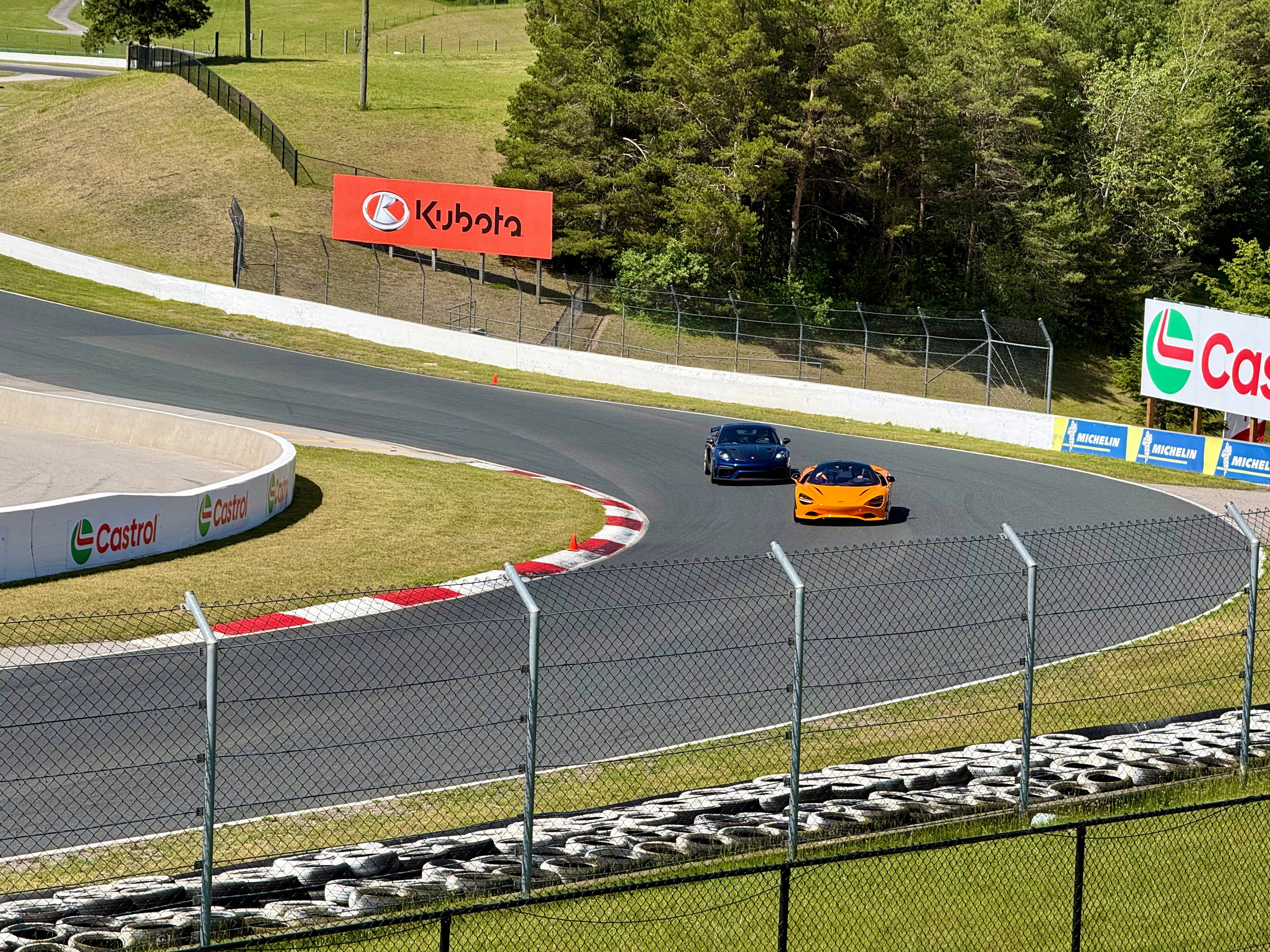
I heard a lot of something along the lines of, “I just turned my fastest lap ever,” or “I knocked half a second (or more) off my previous PB.” These were usually after we’d talked about spending the next session specifically focused on one deliberate practice drill.
However, if there was a common negative trait/behavior/action amongst the varying levels of drivers I spent time talking with, it was trying to find speed in the wrong places. What do I mean by that? Well….
Mismanaging compromise corners
Every now and then, I hear a driver say, “Oh, that’s a throwaway corner.” They’re referring to a corner that connects to another one, and that second one is more important for getting a good lap time. For example, it may be a left-hander that leads directly into a right-hander which leads onto a long straight. In this case, the one leading onto the straight is the highest priority, so not using all the track when exiting the first corner in the sequence sets up the strong run onto the straight.
But, it’s NOT a “throwaway” corner. It’s a compromise corner. There’s no such thing as a corner that doesn’t matter, that can be thrown away. In fact, an argument can be made for just how important that initial corner is because if you don’t compromise the line through it enough, you’ll be slow on the following straightaway.
Just as bad is over-driving the compromise corner. In this case, the driver wins the race through the left-hander—the first corner in the sequence—and in doing so, loses the race through the right-hander and down the following straightaway. Win the battle, but lose the war.
So, setting a fast lap time not only means knowing where to go fast, but also where to give up some speed to maximize it elsewhere.
Late, hard braking
More than once (many times, actually), I’ve asked a group of drivers—or a single driver—how they could shave half a second off their fastest lap time. At least three-quarters of the time the response was some form of “later braking.” And most of those times, if that’s exactly what they did during their next session on track, there was very little to no improvement in lap times. Why? Because along with the later braking came harder braking.
